
From visit to conversion
One visitor, three visits and a purchase, and what Attribution records at each step
This page follows one visitor through three visits and a purchase and shows what Attribution records at each step: what a visit is, how a paid visit is tied to the ad that produced it, and how the three visits and the purchase come together as one person's story. Read your dashboard picks the story up from there and shows what the dashboard makes of it.
An organic visit
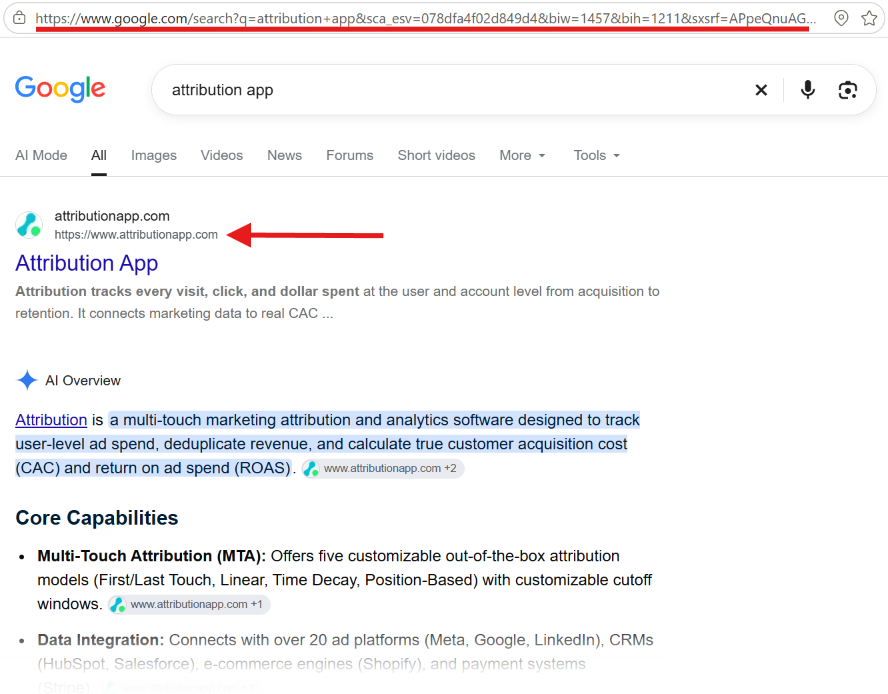
Imagine I am a potential Attribution customer browsing Google. I search for "attribution app" and click the first result, the organic listing for attributionapp.com, rather than an ad.
I land on the attributionapp.com homepage and the snippet on that page records a visit. What is on the page does not matter to Attribution; where I came from and the URL I arrived at do.
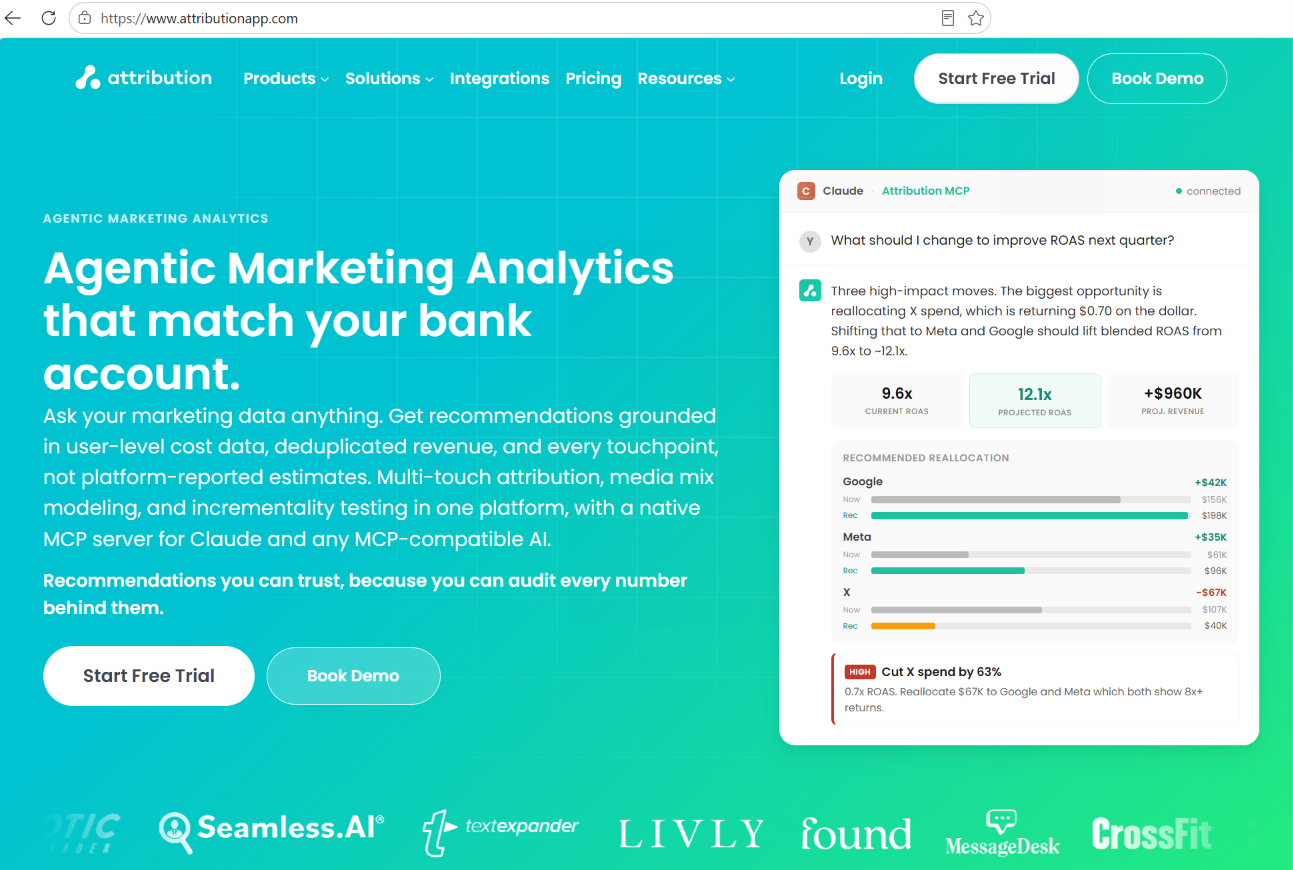
The visit records a referring domain of google.com and a destination URL of attributionapp.com/ with no advertising parameters. A visit from a search engine with no ad parameters is organic, so this one lands in the Organic channel under its Google Organic filter. Visits & Visitors explains what else a visit records, and Default channels lists the sources every project starts with.
A paid Google visit
Two days later I search again and this time click a Google ad. I land on the page with a gclid parameter in the URL.
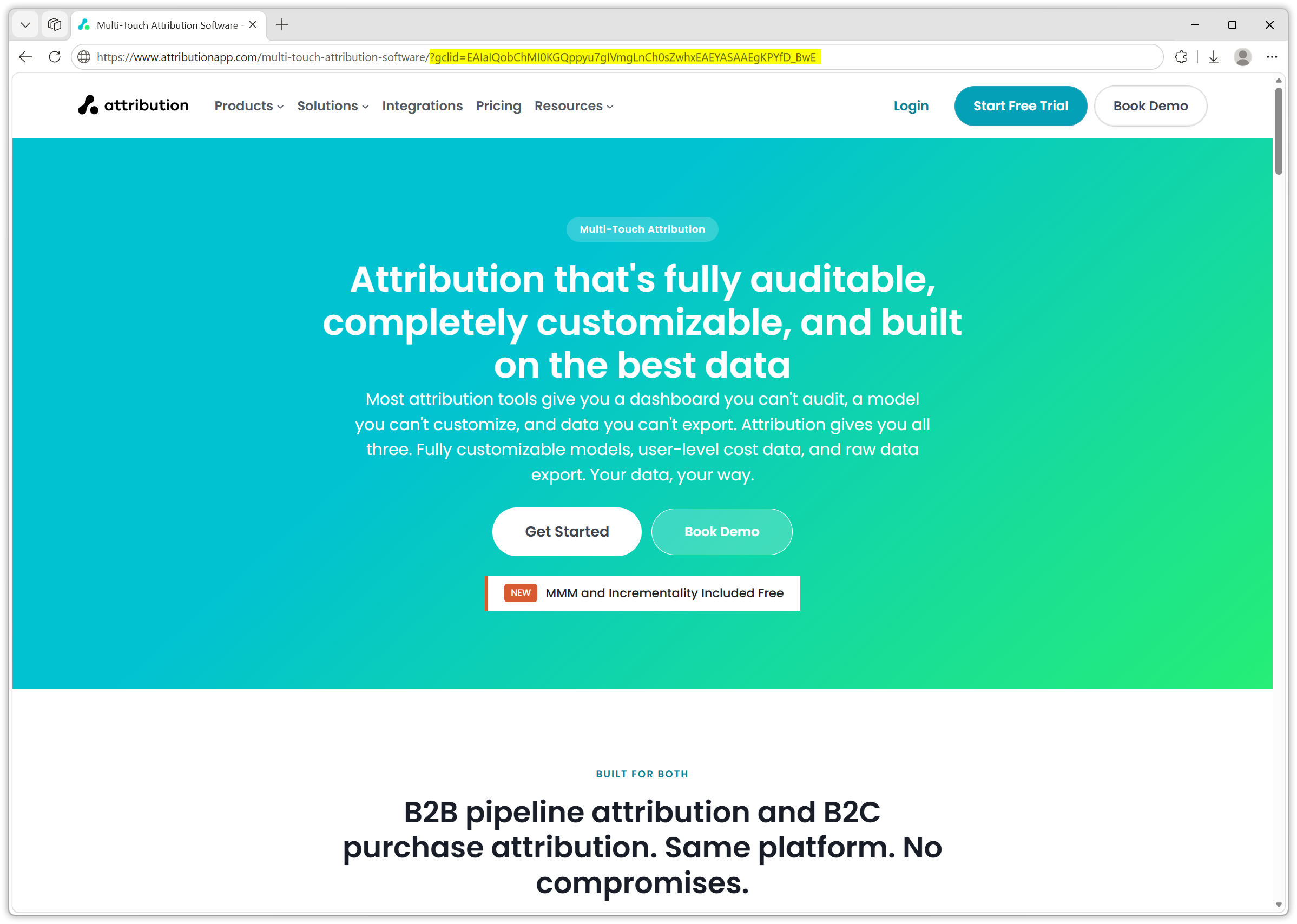
Something in the landing URL always ties a paid visit to the ad that produced it; what that something is depends on the platform.
- Google Ads adds its own click ID, the
gclid, to every ad click. Attribution reads it from the visit and matches it to the click through the Google Ads integration, which can take up to a day. - Meta Ads has no such ID that Attribution can match, so Attribution adds its own
fbaidparameter to your ad URLs through the Meta Ads integration and looks for it on the visit. - Other platforms, Microsoft Advertising for example, are matched by the UTM parameters on the ad:
utm_source,utm_medium,utm_campaignandutm_term, through a filter that looks for those values.
Either way the visit lands in the filter for that campaign, here Google Ads, and the same integration pulls the campaign's spend each day, so the filter knows what the click cost: $5 in this example.
A paid Meta visit and the purchase
Two days after that I click a Meta ad, a visit Attribution credits to the Meta Ads filter, with $10 of spend behind it. During this visit I submit the demo form and then buy. Those are two track() calls from the site, Demo Requested and Order Paid with revenue: 120, and the form submit also carries an identify() call with my email, so Attribution knows who I am. The install page shows how these calls are sent.
One visitor, three visits
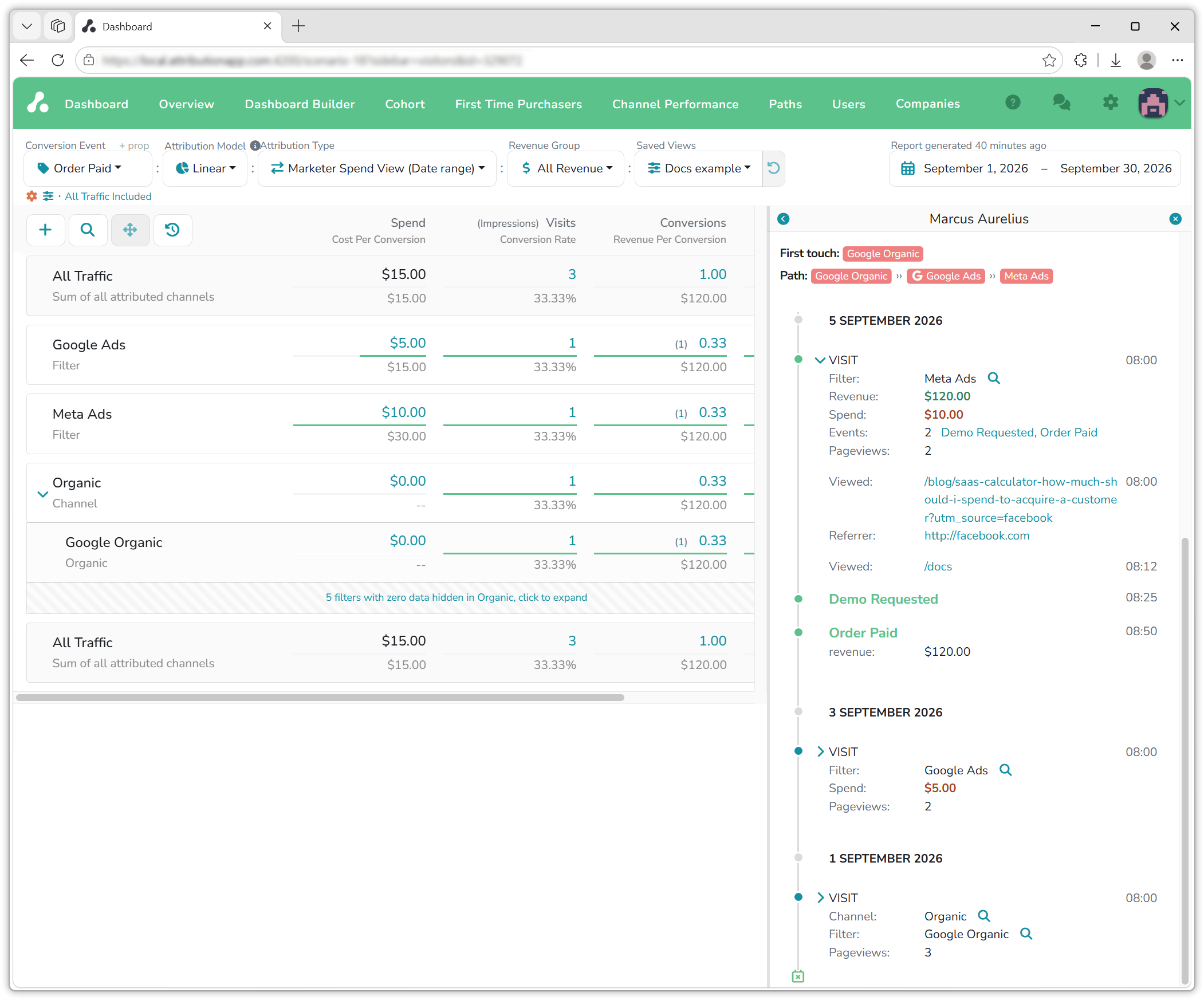
All three visits belong to one visitor: the snippet recognised the same browser each time, and the identify call tied the purchase to a known person. Open the visitor from the dashboard and the sidebar shows the whole story, first touch, path and a timeline of the three visits with the events that happened during them.
What happens next
Three visits came before one purchase, and only two of them cost anything. That is the question Attribution exists to answer: how much of the $120 did the Google ad earn, how much did the Meta ad earn, and how much belongs to the organic visit that started it all? The answer depends on the attribution model you choose, and the dashboard is where it is laid out, row by row.
Read your dashboard continues with this same visitor: the credit split three ways, what each row of the dashboard then says, and what changes when you switch the model.
In short
Real journeys have more touches, more visitors and more conversions, and the same rules apply: each visit is recorded with where it came from, each paid visit is tied to its ad and its spend, and an identify call turns a browser into a person. How it works explains each of these pieces in turn.
If you have any questions, write to [email protected].
Updated 15 days ago